When commercial activity is tracked across spreadsheets, inboxes and separate reports, nobody has a dependable picture of pricing, orders or performance at any given moment. This case study explores how a connected Commercial Operations Platform built on Microsoft Power Platform brings that information together into a single, usable view of the commercial function.
A commercial function usually knows more than it can easily show. The data exists, but it lives in files owned by different people, in shapes that only make sense to whoever built them.
See the demoIn many sales and commercial organisations, pricing rules live in one spreadsheet, order tracking in another, and performance reporting in a third that is rebuilt every month. Each file serves the person who created it. None of them serve the organisation as a whole, and the cost shows up in delays, inconsistent numbers and decisions made on information that is already out of date.
Pricing files, order trackers and performance sheets multiply across the team. Each has a different owner, a different version and a slightly different answer.
By the time the monthly report is assembled, the commercial picture has already moved. Decisions are made on historical information.
Pricing, orders and performance are managed separately, so no one can follow a commercial decision through from quote to outcome without manual cross-referencing.
The knowledge of "how the numbers work" sits with a small number of individuals. When they are unavailable, the reporting stops.
The result is a commercial function that is busy and knowledgeable, but structurally unable to answer basic questions quickly: what did we quote, what did we win, and how are we tracking against plan? This is not a data problem. It is an environment problem.
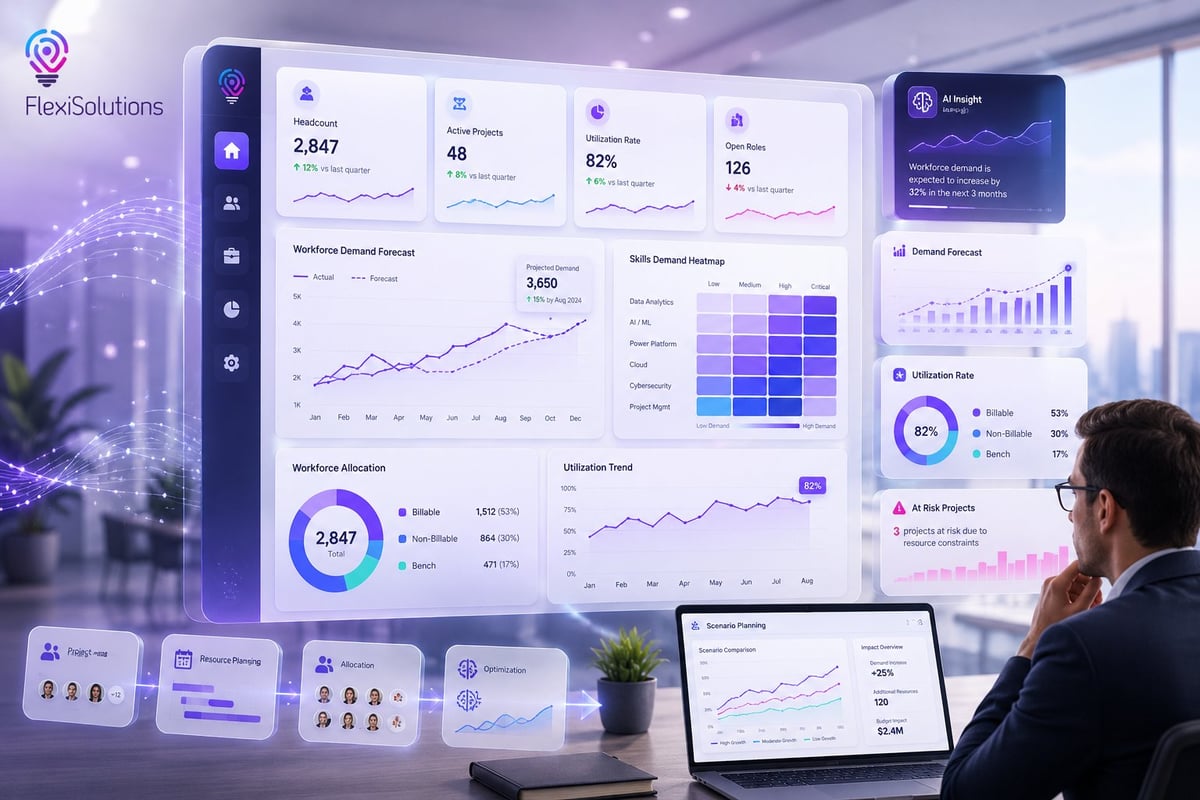
FlexiSolutions designed and built a Commercial Operations Platform on Microsoft Power Platform that brings commercial activity into a single connected environment. Rather than forcing the team into a fixed product, the platform is shaped around how commercial work actually runs.
Pricing information stops being distributed across personal files. It lives in one maintained location, with a clear current state, so the commercial team works from the same reference rather than reconciling versions.
Orders are captured and tracked within the platform, connected to the pricing and commercial context around them, rather than being appended to a tracker someone updates when they remember.
Commercial performance is reported from the underlying data rather than rebuilt each month. The reporting is a view of the platform, not an additional job that has to be done alongside it.
Because the platform sits on a shared data layer, pricing, orders and performance relate to each other by design. The commercial story can be followed end to end without a manual join between three files.
The Commercial Operations Platform is a working demonstration. It showcases how Microsoft Power Platform can support commercial operations for an organisation that has outgrown spreadsheet tracking, and how a tailored business application can be shaped around the pricing, order and reporting requirements of a specific business instead of a generic template.
The capabilities below describe what the demonstration covers. In a real deployment, the scope is shaped by your commercial processes, your reporting requirements and the systems you already run.
Commercial pricing information maintained in a single, controlled place, so the team works from the same reference instead of reconciling versions across personal files.
Orders captured and followed through within the platform, connected to the commercial context around them rather than appended to a tracker.
Commercial performance visible in a consistent form, drawn from the same data the team works in, with no separate monthly assembly exercise.
A consolidated view of commercial activity that gives the team and management the same starting point for a conversation about performance.
Commercial data is visible to the people who need it and appropriately restricted for those who don't, in line with how commercial information is normally handled.
The demonstration is a starting point. A real deployment is designed around your pricing rules, order lifecycle, approval steps and reporting structure.
The value of a commercial platform is not in the software. It is in what the commercial team can do once the information is dependable and reachable. The benefits below describe the pattern these platforms are designed to produce, and the actual outcome in any organisation depends on its processes, its data and how it is used.
Back to all case studiesOne view of pricing, orders and performance, available when the question is asked rather than at the end of the month.
The commercial function works from one environment instead of a collection of files that only partly overlap.
Reporting is a view of the platform rather than a separate recurring task, which returns time to the commercial work itself.
When pricing, orders and performance live in one environment, the conversation stops being about which figure is right and starts being about what to do.
Because the platform is built on Power Platform, additional capabilities can be added over time without replacing what already works.
Explore the live demonstration, or talk to FlexiSolutions about tailoring a commercial operations platform to your own pricing, order and reporting requirements.
The demo shows the pattern. It is a working environment, not a slide.
A real platform is designed around your pricing rules and commercial workflow.
We will tell you what a realistic scope looks like, and what it does not.
The capabilities behind this platform are available as standalone services if they are the part of the puzzle you need first.
The application layer: canvas and model-driven apps built around your commercial processes.
Deeper commercial reporting and dashboards where standard views are not enough.
Automating pricing approvals, order flows and commercial notifications.
Connecting the platform to ERP, CRM and existing commercial systems.