Most organisations know less about their own workforce capabilities than they would like. Skills, certifications and competencies are recorded in spreadsheets, in HR systems, in managers' heads, and rarely in one place that anyone can trust. This case study looks at how a centralised Skills Management Platform, built on Microsoft Power Platform, brings that information together.
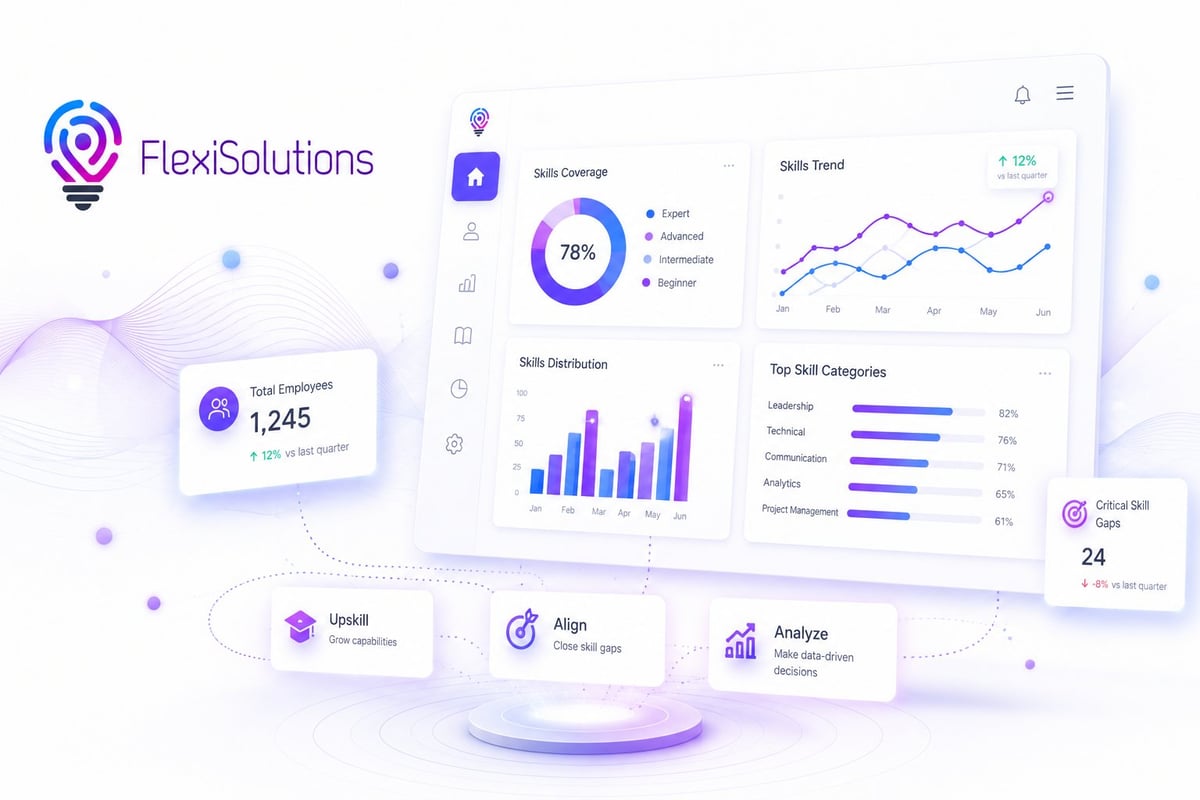
Organisations rarely lack skills information. They lack a reliable way to see it across departments and systems, in a form that supports a decision rather than another spreadsheet.
See the demoIn many organisations, skills, certifications and workforce capabilities are recorded in spreadsheets, stored across disconnected HR systems, or held informally by line managers. The information exists, but assembling it into something usable takes far more effort than it should, and the result is usually out of date before it is finished.
Each department maintains its own version. Nobody is certain which one is current, and reconciling them takes time nobody has.
A capability that exists in one team is invisible to another that needs it. The organisation ends up buying or hiring for skills it already has.
Skills reporting is a recurring manual exercise, which means it happens less often than the business needs it to, and with less confidence each time.
Workforce planning becomes an exercise in estimation rather than evidence, and the risk of a planning decision is carried by the business.
The practical consequence is a familiar one: leadership teams are asked to make workforce decisions (where to invest, where to develop, where to hire) with information that is partial, delayed and hard to defend. The problem is not a lack of data. It is the absence of a usable view.