Supply Chain

7 High-Impact Supply Chain Optimisation Strategies for Large Enterprises Operating in Europe

Seven practical strategies for European enterprises to improve visibility, manage costs, reduce risk and build more resilient supply chain operations.

Oct 12, 2026 15 min read
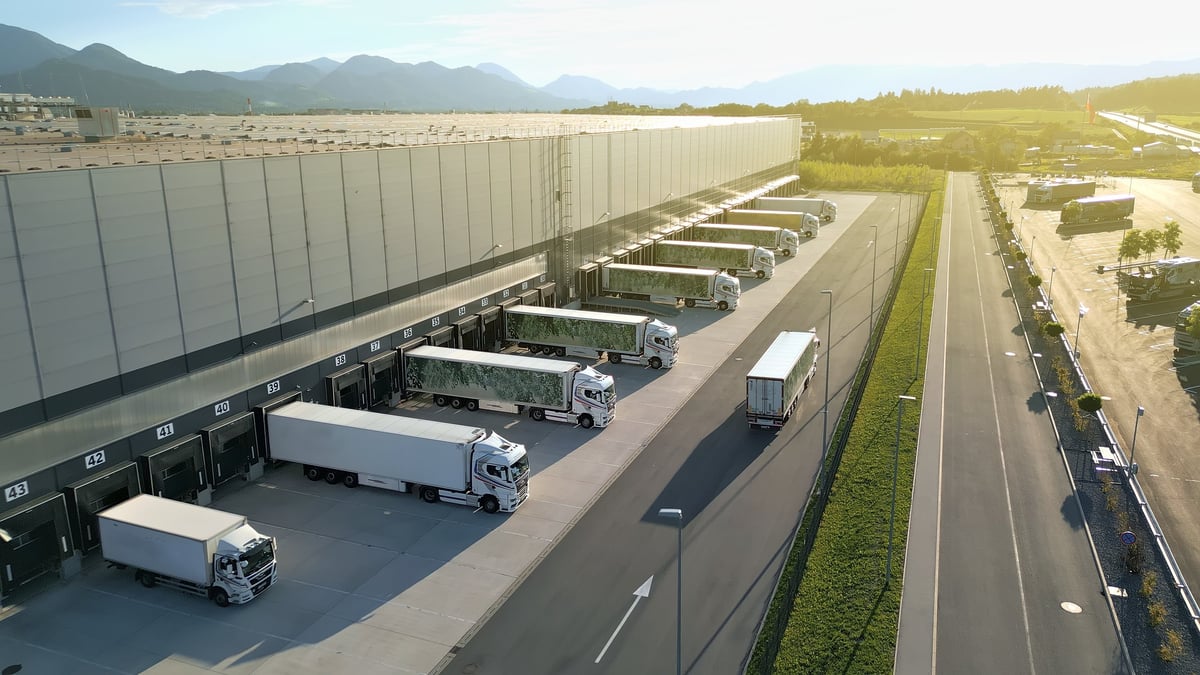
An aerial shot of aerial view of a bustling distribution warehouse with multiple trucks lined up at loading docks, set against a scenic mountain backdrop. The scene highlights efficient freight transportation and logistics operations, emphasizing modern infrastructure and cargo management.

Managing a large supply chain involves more than moving products from suppliers to customers. Enterprises must balance operating costs, inventory, customer service, supplier reliability and changing market conditions across multiple locations and countries.

For businesses operating in Europe, these challenges can be particularly complex. Cross-border transport, different market requirements, supplier dependencies and sustainability considerations all influence how goods move through the network.

When information is spread across disconnected systems, teams may struggle to identify delays, manage stock levels or understand where costs are increasing. Decisions made by one department can also create problems elsewhere. Reducing inventory, for example, may lower storage costs but increase the risk of shortages if demand or supplier lead times change.

Effective supply chain optimisation requires a joined-up approach. It combines efficient processes, reliable data, coordinated planning and technology that helps people make better decisions.

Here are seven strategies large European enterprises can use to improve supply chain performance, manage risk and build more resilient operations.

1. Build End-to-End Supply Chain Visibility

Large enterprises often manage suppliers, warehouses, production facilities and transport providers across multiple locations. Each part of the network may use different systems, making it difficult to see what is happening across the supply chain as a whole.

The strategy: Connect relevant supply chain information through an end-to-end visibility platform or digital control tower.

A control tower brings information from different systems into a shared view, helping teams monitor orders, inventory, shipments, supplier performance and potential disruptions. It can also support alerts and scenario analysis, allowing decision-makers to assess problems before they become more serious.

For example, if a shipment is delayed, a supply chain team could identify the affected orders, check available stock at other locations and assess alternative delivery options.

How to put it into practice

  • Identify where important supply chain information is stored.
  • Connect relevant ERP, warehouse, order and transport data.
  • Establish consistent definitions for inventory, orders and delivery performance.
  • Build dashboards that highlight exceptions rather than simply displaying large amounts of data.
  • Assign clear responsibility for responding to alerts.

The aim is not to collect every possible data point. It is to give the right people reliable information they can act on.

Business value

Better visibility can help teams respond earlier to disruptions, reduce time spent gathering information and coordinate decisions across departments.

2. Optimise Inventory Across the Entire Network

Holding too much inventory ties up working capital and increases storage costs. Holding too little can lead to stock shortages, production delays and missed customer commitments.

These trade-offs become harder to manage when an enterprise operates several warehouses or distribution centres across Europe. One location may have excess stock while another experiences repeated shortages.

The strategy: Use multi-echelon inventory optimisation (MEIO) to plan stock across multiple locations as one connected network.

Rather than setting inventory targets for each warehouse independently, MEIO considers how demand, replenishment lead times, stock availability and service requirements interact across the network. This helps businesses decide where inventory is most useful and how much protection is needed against uncertainty.

For example, a distributor could identify products that are overstocked in one warehouse but regularly unavailable in another. Better planning may allow stock to be repositioned before new purchases are made.

How to put it into practice

  • Review stock levels and movements across all locations.
  • Identify excess, slow-moving and frequently unavailable products.
  • Set suitable service levels and safety-stock rules for different product categories.
  • Improve demand forecasting and replenishment planning.
  • Consider stock transfers between locations before placing additional orders.

Not every warehouse will necessarily hold less stock after optimisation. The goal is to reduce unnecessary inventory across the network while maintaining the service levels the business needs.

Business value

Better inventory planning can free up working capital, reduce excess stock and improve product availability.

3. Review the Logistics and Sourcing Network Regularly

A logistics network that worked well several years ago may no longer be the most effective option. Changes in customer demand, transport costs, supplier locations and trade conditions can alter the best way to move goods.

Enterprises may continue using familiar warehouse locations, transport routes or sourcing arrangements even when their costs or risks have changed.

The strategy: Treat network design as an ongoing business decision rather than a one-off project.

This involves reviewing warehouse locations, distribution capacity, transport routes and sourcing options. Businesses can use scenario modelling to compare different arrangements before committing to expensive changes.

For example, an enterprise could compare its current distribution network with a model that uses different regional hubs. The assessment should consider delivery times, transport costs, inventory requirements, disruption exposure and customer service.

Depending on the business, nearshoring or dual-sourcing may also be worth evaluating. Sourcing from closer or additional suppliers can reduce certain dependencies, but the benefits need to be weighed against production costs, capacity and supplier capability.

How to put it into practice

  • Map suppliers, warehouses, customers and major transport routes.
  • Review transport costs, delivery times and warehouse utilisation.
  • Model alternative locations and sourcing arrangements.
  • Assess cross-border requirements and potential disruption scenarios.
  • Compare cost, service, resilience and emissions before choosing a design.

Business value

Regular network reviews can reveal opportunities to improve delivery performance, use capacity more effectively and reduce avoidable logistics costs.

4. Manage Supplier Risk Beyond Tier 1

A supply chain can be disrupted by problems that occur well beyond an organisation's direct suppliers.

A Tier 1 supplier may depend on another company for a critical component, which in turn depends on a supplier in a different region. If the enterprise has no visibility into these dependencies, it may not recognise a serious risk until production or delivery is already affected.

The strategy: Segment suppliers by business risk and improve visibility into critical dependencies across multiple supplier tiers.

Not all suppliers require the same level of attention. A supplier providing a readily available product may present a different risk from one supplying a critical component with a long replacement lead time.

How to put it into practice

  • Identify suppliers and materials that are essential to operations.
  • Review supplier performance, lead times and the availability of alternatives.
  • Map Tier 2 and Tier 3 dependencies where they are important and information is available.
  • Assess geographic concentration and exposure to disruption.
  • Develop alternative sourcing or contingency plans for critical items.
  • Establish clear escalation procedures for serious supplier issues.

This information becomes more useful when connected to purchasing, inventory and production data. Teams can then assess which orders or operations may be affected by a supplier problem.

For enterprises with applicable sustainability reporting or due-diligence obligations, supplier information may also support their wider compliance processes. The specific requirements depend on the company's circumstances and the rules currently in force.

Business value

Better supplier risk management helps organisations identify vulnerabilities, prepare alternatives and respond more effectively to disruptions.

5. Connect Planning Across Sales, Operations, Finance and Sustainability

Supply chain decisions rarely affect just one department.

Sales teams need to understand product availability. Procurement needs to plan purchases. Operations needs sufficient materials and capacity. Finance needs visibility into costs and working capital, while sustainability teams may need information about emissions and resource use.

When these teams work from different forecasts or assumptions, their plans can conflict.

The strategy: Establish Integrated Business Planning (IBP) so that demand, supply, financial and relevant sustainability decisions are considered together.

IBP creates a shared planning process in which teams review forecasts, constraints, risks and business priorities. Scenario modelling can help them assess the effects of changes before committing to a course of action.

For example, if demand for a product increases unexpectedly, the business can evaluate whether suppliers can meet the additional demand, whether production capacity is available and whether the extra cost makes commercial sense.

How to put it into practice

  • Establish a regular planning cycle with clear ownership.
  • Use shared forecasts and consistent data.
  • Compare demand with supply, capacity and financial constraints.
  • Model scenarios such as supplier delays or sudden demand increases.
  • Agree how conflicting priorities will be resolved.
  • Track whether agreed plans lead to the expected operational results.

Technology supports the process, but it cannot replace clear responsibilities and cooperation between departments.

Business value

Integrated planning helps leaders balance customer service, inventory, capacity, cost and profitability instead of improving one area at the expense of another.

6. Include Sustainability and Compliance in Operational Decisions

Sustainability can affect transport choices, sourcing decisions, packaging, supplier selection and the way products move through a supply chain.

European enterprises also need to understand which reporting and due-diligence requirements apply to their organisation. These obligations depend on factors such as company size, activities and applicable legislation, and European rules have been changing.

The strategy: Include relevant environmental and compliance considerations in supply chain planning rather than treating them only as a reporting exercise.

For example, a logistics team comparing transport options could assess cost, delivery time and emissions together. Procurement teams could also consider supplier information alongside price, quality and reliability.

The objective is to understand the trade-offs and make informed decisions rather than assuming that the cheapest or fastest option is always the best.

How to put it into practice

  • Identify the sustainability measures relevant to the business.
  • Improve the collection of supplier and transport data.
  • Track relevant emissions and resource-use indicators.
  • Assess delivery consolidation and transport alternatives where appropriate.
  • Review applicable European and national reporting obligations.
  • Monitor regulatory changes and obtain specialist advice where needed.

The European Commission's sustainability reporting guidance and due-diligence information provide useful starting points for understanding the framework. Businesses should verify the rules that apply to them rather than assume that all enterprises have identical obligations.

Business value

Integrating sustainability into operational decisions can improve transparency, support better planning and help businesses prepare for relevant reporting responsibilities.

7. Apply AI, Analytics and Automation Where They Add Value

Supply chain teams generate large amounts of data, but collecting it does not automatically lead to better decisions.

Advanced analytics can help identify patterns in demand, inventory and supplier performance. AI can support forecasting, interpret unstructured information and highlight exceptions that need attention. Automation can then reduce the manual work involved in routine tasks.

The strategy: Start with specific business decisions that could improve with better information or faster processing, then select the technology that fits the task.

For example, analytics could help identify unusual changes in demand. An AI-enabled workflow might review a supplier email, retrieve the relevant purchase order and prepare a recommendation when a delivery is delayed. A controlled workflow or integration could then update the system after validation or approval.

Not every process needs AI. A stable task with clear rules may be better handled by a conventional workflow or direct system integration.

How to put it into practice

  • Identify repetitive decisions or tasks that consume significant manual effort.
  • Check that the required data is accurate and accessible.
  • Choose a focused use case, such as exception identification or demand forecasting.
  • Compare the results with the current process.
  • Define access permissions, validation rules and escalation procedures.
  • Monitor performance and expand only when the results justify the investment.

Business value

Well-chosen analytics and automation can help teams make informed decisions faster, reduce manual effort and focus attention on issues that need human judgement.

How These Seven Strategies Work Together

These strategies are most effective when they support one another.

A control tower improves visibility across the supply chain. Inventory optimisation uses better information to determine where stock is needed. Supplier risk management identifies potential disruptions, while integrated planning helps teams agree on how to respond. Network modelling compares alternative arrangements, and analytics or automation can support faster decisions.

This depends on a reliable data foundation. If systems contain inconsistent information or departments use different definitions, even sophisticated technology may produce misleading results.

For large enterprises, the goal is to make decisions using a shared view of cost, service, resilience, inventory and relevant sustainability measures.

That does not mean implementing every capability at once. It means understanding how each improvement affects the wider business and prioritising the changes that deliver the most value.

A Practical Roadmap for Supply Chain Optimisation

Enterprises do not need to redesign the entire supply chain in one project. A phased approach can help them make progress while managing cost and risk.

1

Identify the main business problems

Determine where delays, excess inventory, supplier issues or manual work are having the greatest impact.

2

Establish a baseline

Measure relevant indicators such as inventory turnover, order fulfilment, on-time delivery, forecast accuracy and transport cost.

3

Map the process and data

Understand how information moves between teams and systems, and identify gaps that prevent effective decisions.

4

Prioritise improvements

Compare opportunities based on business value, implementation effort, risk and readiness.

5

Select the right solution

Determine whether the problem requires process changes, better use of existing systems, new integrations, analytics or automation.

6

Test before scaling

Run a focused pilot, compare the results against the baseline and address problems before extending the approach.

7

Review performance regularly

Monitor results, gather feedback and adjust the process as business conditions change.

This approach keeps the focus on measurable improvements rather than introducing technology without a clear business reason.

The Role of Technology in Supply Chain Optimisation

Technology can help enterprises connect information, improve planning, automate routine work and gain better visibility into performance. The right approach depends on the systems already in place and the operational problem being addressed.

SAP supply chain capabilities can support planning, inventory management and supply chain visibility, depending on the products implemented. Microsoft technologies can support business applications, reporting, workflows and integration across connected systems.

For some organisations, improving an existing ERP process may be enough. Others may need to connect several applications, improve data quality or introduce dashboards that make operational information easier to use.

The important question is not which platform has the most features. It is whether the proposed solution addresses the business problem, fits the existing environment and can be maintained effectively.

Build a More Connected and Resilient Supply Chain

For large enterprises operating in Europe, supply chain optimisation requires a balance between cost, service, working capital, resilience and relevant sustainability considerations.

Improving visibility, optimising inventory, reviewing logistics networks, managing supplier risk, connecting planning, integrating sustainability and applying analytics can all contribute to stronger operations.

The real value comes when these efforts work together. Better information supports better planning. Better planning helps teams manage stock and supplier risks. Connected systems make it easier to identify problems and take action.

The first step is not necessarily to purchase another platform. It is to understand where the supply chain is underperforming, identify the causes and decide which improvements will deliver the greatest value.

At FlexiSolutions, we start with the business challenge and work towards a practical solution. Whether the priority is improving operational processes, connecting enterprise systems, making better use of data or automating manual work, the focus is on helping technology support the way the business needs to operate.

If your organisation is looking to improve supply chain visibility or connect its business processes and systems, explore our Business Excellence & Operations, Solutions Architecture & Design and AI & Copilot Enablement services to learn more about our approach.

Ready to strengthen your supply chain operations?

FlexiSolutions helps large European enterprises improve supply chain visibility, optimise inventory, connect planning and connect enterprise systems. We start with your business challenge and work towards a practical, maintainable solution.